The Rise of Augmented and Virtual Reality Technologies in the Educational Sector
Transforming Education with AR and VR
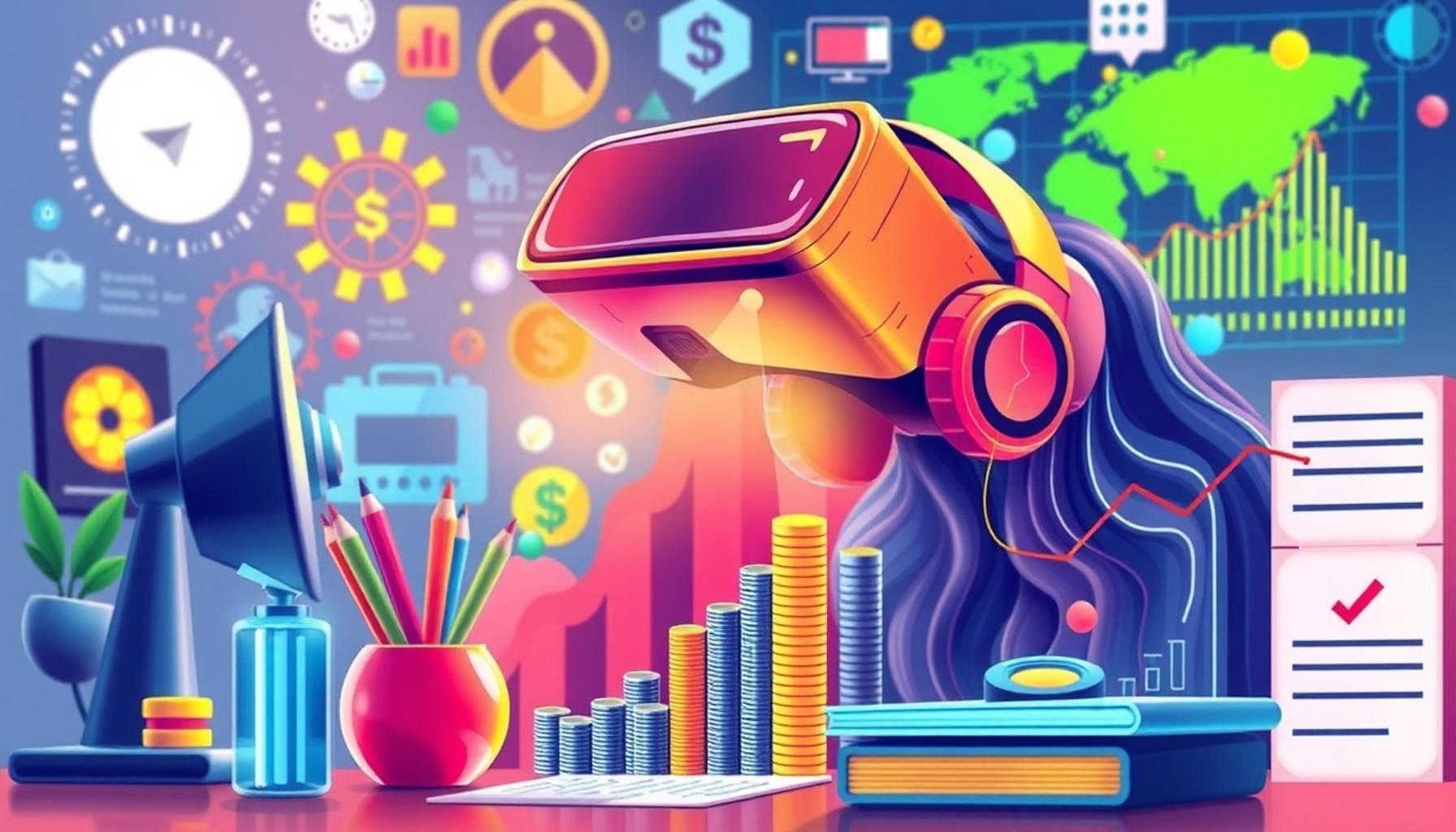
Imagine stepping into a classroom where history lessons come alive or complex scientific concepts are visualized in 3D. Augmented Reality (AR) and Virtual Reality (VR) technologies are making this a reality in educational settings across the United States. These revolutionary tools enhance the traditional learning experience, allowing students to immerse themselves in content like never before.
One of the most compelling benefits of integrating AR and VR into education is their ability to enhance engagement. Students are more motivated when they can interact with digital content in an immersive environment. For example, a student learning about the solar system can don a VR headset and explore each planet up close, witnessing its features and understanding its movement in real-time, rather than simply reading from a textbook.
Furthermore, these technologies provide experiential learning opportunities that traditional classrooms often lack. VR allows students to take virtual field trips to historical sites or to engage in lab simulations for chemistry experiments that would otherwise pose safety risks. Imagine a class of high school chemistry students conducting a virtual safe lab experiment on chemical reactions, where they can experiment without the hazards associated with real chemicals.
Moreover, AR and VR work to accommodate diverse learning styles. These immersive technologies cater to visual, auditory, and kinesthetic learners alike, ensuring a more inclusive educational experience. For instance, a student who struggles with traditional learning methods may thrive in a VR environment where they can manipulate 3D models, enhancing their understanding of complex theories.
As educators and institutions continue to adopt AR and VR, we see numerous examples of success. For example, medical students can practice surgeries in a risk-free virtual environment, honing their skills before engaging with real patients. This experience not only builds their confidence but also prepares them for actual surgical procedures with a deeper understanding of body mechanics and anatomy.
Similarly, in history classes, teachers use AR to visualize historical scenarios, allowing students to walk through ancient civilizations or witness significant events like the signing of the Declaration of Independence, providing a richer context that fosters deeper understanding.
In the realm of STEM education, interactive simulations allow teachers to demonstrate complex theories in tangible ways. For example, students learning about physics can manipulate variables in a VR simulation to see how they affect motion, making abstract concepts more concrete and understandable.
As AR and VR technologies continue to evolve, their potential to reshape the educational landscape becomes increasingly clear. With the prospect of making learning not just digital but truly immersive and interactive, the future of education in the United States is poised for exciting advancements. Embracing these innovative tools can ultimately lead to a more engaging, effective, and inclusive learning experience for all students.
DIVE DEEPER: Click here to learn more
Enhanced Engagement and Experiential Learning
The integration of Augmented Reality (AR) and Virtual Reality (VR) technologies in education has fundamentally transformed how students engage with learning materials. Studies show that these immersive experiences markedly increase students’ focus and retention of information. For instance, when students participate in an interactive AR project, they are not just passive observers but active participants in the learning process. This hands-on approach fosters genuine interest and curiosity, making the subject matter more compelling.
Consider a typical high school biology class where students study the human anatomy. With AR, students can use their smartphones or tablets to view layered 3D models of the human body. When a student points their device at an image in their textbook, they can see the digestive system come to life, observing how each organ interacts with the others. Such interactive experiences promote a deeper understanding of complex topics by allowing students to visualize and explore detailed anatomical functions without the need for a real body. This not only enhances their engagement but also aids in long-term knowledge retention.
Creating Safe and Interactive Learning Environments
Another significant advantage of AR and VR in education is their role in creating safe learning environments. Virtual reality experiences enable students to engage in situations that would be impractical or unsafe in a traditional classroom setting. This aspect is particularly beneficial in subjects such as chemistry, physics, and engineering. For example:
- Virtual Chemistry Labs: Students can conduct experiments that involve hazardous substances in a VR-controlled environment, learning from their mistakes without any actual risk.
- Construction Simulations: Engineering students can manipulate virtual tools and materials, simulating real-world scenarios that hone their skills prior to applying them on-site.
- Emergency Response Training: Medical and nursing students can practice emergency procedures in a realistic yet risk-free setting, boosting their preparedness for real-life situations.
This concept of “learning by doing” plays a vital role in education. By allowing students to experience and experiment in a virtual setting, they can grasp concepts that may otherwise be too abstract or too dangerous. Moreover, these safe simulations encourage students to take risks in their learning without the fear of negative consequences, ultimately fostering innovation and critical thinking.
As AR and VR technologies continue to proliferate in schools and universities across the United States, it is clear they offer promises far beyond mere entertainment. They provide tools that can significantly enhance the educational experience, making learning more engaging, interactive, and effective for a diverse array of learners.
DIVE DEEPER: Click here to learn more
Bridging Accessibility Gaps and Customizing Learning Experiences
One of the most profound impacts of AR and VR technologies in education is their ability to bridge accessibility gaps for students with diverse learning needs. By utilizing these immersive technologies, educators can create customized learning experiences that cater to a wide range of abilities and preferences. For instance, students with learning disabilities such as dyslexia can benefit from augmented reality applications that overlay visual supports and interactive prompts on traditional texts, enhancing comprehension and engagement.
Additionally, virtual reality can provide essential support for students with physical disabilities or mobility challenges, enabling them to participate in classroom activities they otherwise might find difficult or impossible. Imagine a student in a wheelchair experiencing a virtual field trip to a historical site, exploring its landmarks and learning about its significance without the physical barriers present in the real world. Such experiences not only enrich their educational journey but also promote inclusivity by ensuring that all students have equal opportunities to learn.
Global Learning Opportunities
AR and VR technologies also facilitate global learning opportunities that allow students to connect with peers across the world. This technology enables collaborative projects where students from different countries can share their perspectives, culture, and knowledge virtually. For example, through VR, students can embark on an interactive journey through ancient civilizations with their schoolmates from halfway across the globe, fostering international friendships and collaborative problem-solving.
Furthermore, language learning can become more engaging with augmented reality. Applications can overlay translations, pronunciation guides, and cultural context onto real-world environments, helping students immerse themselves in the language they are studying. By practicing their skills in real-world settings, learners have the chance to develop conversational competencies that are vital in today’s globalized world.
Data-Driven Insights and Personalized Learning
The implementation of AR and VR also allows for the collection of valuable data that can drive personalized learning experiences. Educators can analyze students’ interactions within these environments, gaining insights into their engagement patterns and areas of struggle. This information enables adaptive learning platforms to tailor content to meet individual needs, ensuring that students receive targeted support and resources. By assessing performance in real-time, educators can quickly intervene when a student shows signs of difficulty, thus fostering a more responsive educational environment.
For example, in a VR-based mathematics program, if a student struggles with geometry concepts, the system can adjust the challenges to focus on those specific areas while providing supportive hints and tutorials drawn from the student’s previous interactions. This ability to cater to individual learners’ needs not only aids in overcoming learning hurdles but also motivates students by recognizing their unique educational journeys.
As more educators begin to embrace these transformative technologies, the educational landscape is poised for a significant shift. By combining accessibility, global interaction, and data-driven insights, augmented and virtual reality promise to create a more equitable and effective learning environment for all students. This dynamic shift ensures that learners are not only equipped with knowledge but are also prepared to thrive in an increasingly complex and interconnected world.
DISCOVER MORE: Click here for expert tips
Conclusion
In conclusion, the rise of augmented and virtual reality technologies in the educational sector signifies a transformative shift that enriches learning experiences for students of all backgrounds. By addressing accessibility gaps, these technologies create inclusive environments where every learner has an opportunity to succeed. For students with diverse learning needs, AR and VR offer innovative methods that enhance understanding, engagement, and participation.
Moreover, the potential for global collaboration through these virtual environments fosters cross-cultural exchanges that prepare students for the interconnected world they inhabit. By engaging with peers worldwide, learners expand their horizons, develop critical thinking and communication skills, and cultivate a global perspective, essential traits in today’s workforce.
With the aid of data-driven insights generated through AR and VR platforms, educators are empowered to provide personalized learning experiences that adapt to individual student needs. This level of customization not only enhances students’ understanding but also promotes motivation and self-directed learning.
As we move forward, it is crucial for educators, policymakers, and technology developers to continue exploring the possibilities brought about by these advanced technologies. By embracing augmented and virtual reality in classrooms, we can foster a vibrant educational landscape that equips students with the skills and knowledge necessary to thrive in a complex and dynamic world. Ultimately, the integration of these immersive technologies stands to revolutionize education, creating a future where learning is an engaging, inclusive, and enriching experience for all.

Linda Carter
Linda Carter is a writer and expert known for producing clear, engaging, and easy-to-understand content. With solid experience guiding people in achieving their goals, she shares valuable insights and practical guidance. Her mission is to support readers in making informed choices and achieving significant progress.